Showing posts with label football legend. Show all posts

Thursday, June 30, 2011

Ronaldinho

Full name: Ronaldo de Assis Moreira
Date of birth: 21/03/1980

Early Career

Born Ronaldo de Assis Moreira in 1980, but more commonly known as Ronaldinho or Ronaldinho Gaucho (the name given to Brazilians who come from the Rio Grande do Sul area of Brazil), the Brazilian footballer is a renowned forward/ attacking mid-fielder and currently a key player in FC Barcelona. Dubbed the ‘new Pele,’ and regarded as one of the finest talents in the game today, Ronaldinho grew up in the Brazilian city of Porto Alegre and began his career at the youth team of Gremio, the team that first signed his older brother and current manager Roberto.
At the age of thirteen, Ronaldinho began to make his mark on the pitch, when he led his team to victory after scoring all twenty three goals in a local youth match. In 1997 he played in the Egypt Under-17 World Championship, where he impressively scored with two penalty kicks. He went on to represent the Gremio senior team at the Libertadores Cup, a championship for South American clubs, during which he caught media attention for his flair for goal-scoring and his remarkable ball control.

Professional Player

By 2001, having made a total of a hundred and ten appearances and thirty seven goals playing for Gremio and being the only player to have represented his country at all levels of competition (Under 15, 17, 20, 23 and senior teams), Ronaldinho had gained the football world’s attention and he began getting offers from international clubs including Arsenal and other top premiership teams. After much speculation about the next step in his career, Ronaldinho signed a five-year contract with Paris Saint-Germain (PSG) for four and a half million euros and left Brazil to begin a European football career.
Whilst Ronaldinho continued to display his talent for the game, scoring seventeen goals with PSG, he was heavily criticised on numerous occasions for his focus on the Parisian nightlife. In 2002 Ronaldinho represented Brazil as part of the winning team at the FIFA World Cup, scoring against China and a particularly notable goal against England in the quarter-finals. This was not his first successful performance with the Brazilian team, having already shone in the Under-17 World Cup, the Copa America and going on to be part of the champion team in the 2004-05 Confederations Cup.
After his impressive play in the 2002 World Cup, several clubs made multi million pound offers to PSG and a violent bidding war ensued between top international teams, Manchester United and FC Barcelona. After failing to reach an agreement with PSG, Manchester United lost the bid and in 2003 Ronaldinho moved to Spain for a hefty sum of twenty one million Euros.
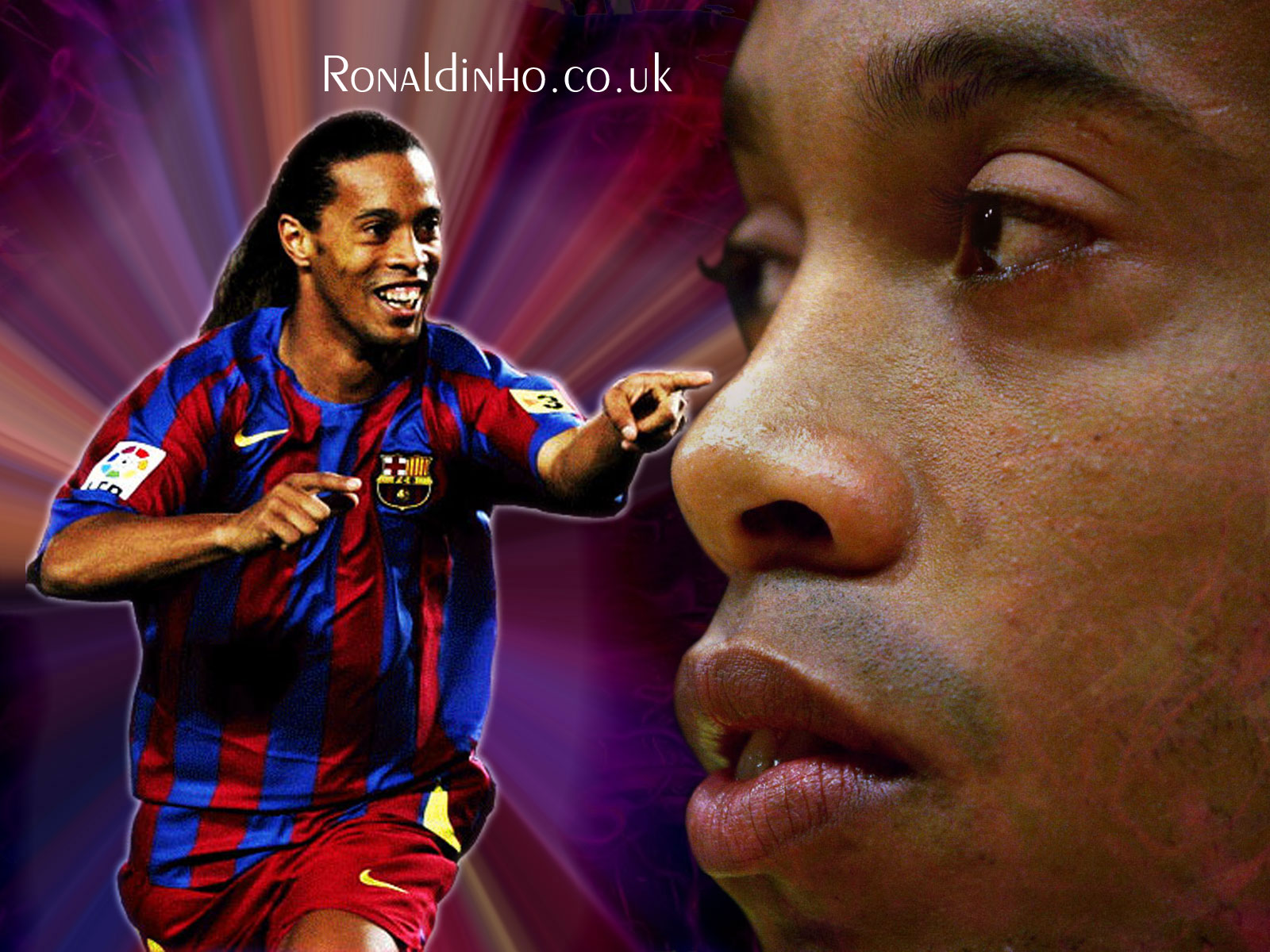
Since joining Barcelona, Ronaldinho has trained under the coaching of Frank Rijkaard, leading him to become more of a forward than a mid-field player with a focus on creating and scoring, rather than destroying and defending. Over the last four years Ronaldinho has made a significant contribution to FC Barcelona’s triumphs, contributing to the team's two year victory in the Spanish Supercup League. Barcelona were also victorious in the 2004/5 and 2005/6 La Liga titles and Ronaldinho made a significant contribution to their most recent triumph when Barcelona won the European Champion’s League in 2006.
Ronaldinho’s contract with FC Barcelona has fallen under much speculation, as several big international clubs have attempted to sign the player as their own. When vice-president Sandro Rosell resigned from the club in 2005, it was feared that Ronaldinho would refuse to extend his contract with Barcelona once it ends in 2008.
After a failed sixty million pound bid from Chelsea and his own refusal of an eighty five million pound bid with Barcelona that would take him up to 2014, Ronaldinho did extend his Barcelona contract for another two years. Ronaldinho will now stay with the club until 2010, unless another club offers at least eighty five million pounds to sign the Brazilian player.
Ronaldinho’s popularity continues to increase on and off the football pitch and, having starred in numerous advertisements for Nike, Pepsi, Lenovo and eight different Brazilian brands, he has surpassed David Beckham as the most marketable player in the world. Ronaldinho’s popularity was marked in 2005, when a twenty three foot high statue of him was erected in the Brazilian city of Chapeco, on winning his first FIFA player of the year award at the end of the 2004/05 season.
Alongside members of his family the striker also appears in a popular comic strip created by Brazilian cartoonist, Mauricio de Sousa. He is loved amongst football fans and professionals alike, having been awarded player of the world for two consecutive seasons and recently appearing in Pele’s much talked about 2004 list of 125 Top Footballers.

Key Moments

  • 2003/04: FC Barcelona v AC Milan - With a 1-0 lead in Ronaldinho’s first key match with Barcelona, the new striker increased their lead to 2-0 in the 51st minute, spinning the ball around Milan’s Fernando Redondo and into the net.
  • 2004: Away from the football pitch Ronaldinho has also filmed several advertisements. On one notable occasion whilst filming in Madrid, he kicked the ball so hard that it smashed a window in the historic Santiago de Compostela Cathedral.
  • 2005: FC Barcelona v Chelsea - At the Champions League final at Stamford Bridge, Ronaldinho scored an unstoppable solo goal and an impressive penalty kick. Despite the team being knocked out by Chelsea in a 4-0 defeat, the match has been remembered for the allegations that the stewards at the match had acted in a racist manner towards Ronaldinho.
  • 2005: Brazil v Argentina - Captaining his nation’s team to glory in the Confederation cup Ronaldinho received Man of the Match after a magnificent 4-1 defeat against Argentina.
  • 2006: FC Barcelona v PFC Levski Sofia - In Barcelona’s 5-0 defeat of PFC, Ronaldinho scored a stunning final goal in the final minute of the match.
  • 2006: FC Barcelona v Villareal - Ronaldinho scored a momentous goal when he scored an outstanding bicycle kick into the net.

Awards


Individual Honours

  • FIFPro World XI: 2005, 2006, 2007
  • FIFA Club World Cup Bronze Ball Award: 2006
  • Best Foreign Player in La Liga: 2004, 2006
  • UEFA Team of the Year: 2004, 2005, 2006
  • UEFA Club Footballer of the Year: 2006
  • FIFPro World Player of the Year: 2005, 2006
  • European Footballer of the Year: 2005
  • UEFA Club Best Forward: 2005
  • FIFA World Player of the Year: 2004, 2005
  • EFE Trophy: Best Ibero-American Player in La Liga: 2004
  • FIFA 100: 2004
  • FIFA World Cup 2002 All-Star Team: 2002
  • Rio Grande do Sul State Championship Top Scorer: 1999
  • FIFA Confederations Cup Golden Ball: 1999
  • FIFA Confederations Cup Top Scorer: 1999
Player Statistics

Senior Club and National Team Statistics
Period Team Appearances (Goals)
1998-2001 Grêmio 35 (14)
2001-2003 Paris Saint-Germain F.C. 55 (17)
2003-2008 F.C. Barcelona 145 (70)
2008-present A.C. Milan 3 (0)
1999-present Brazil 88 (35)

Ferenc Puskás

Full name: Ferenc Purczeld Biró
Date of birth: 02/04/1927
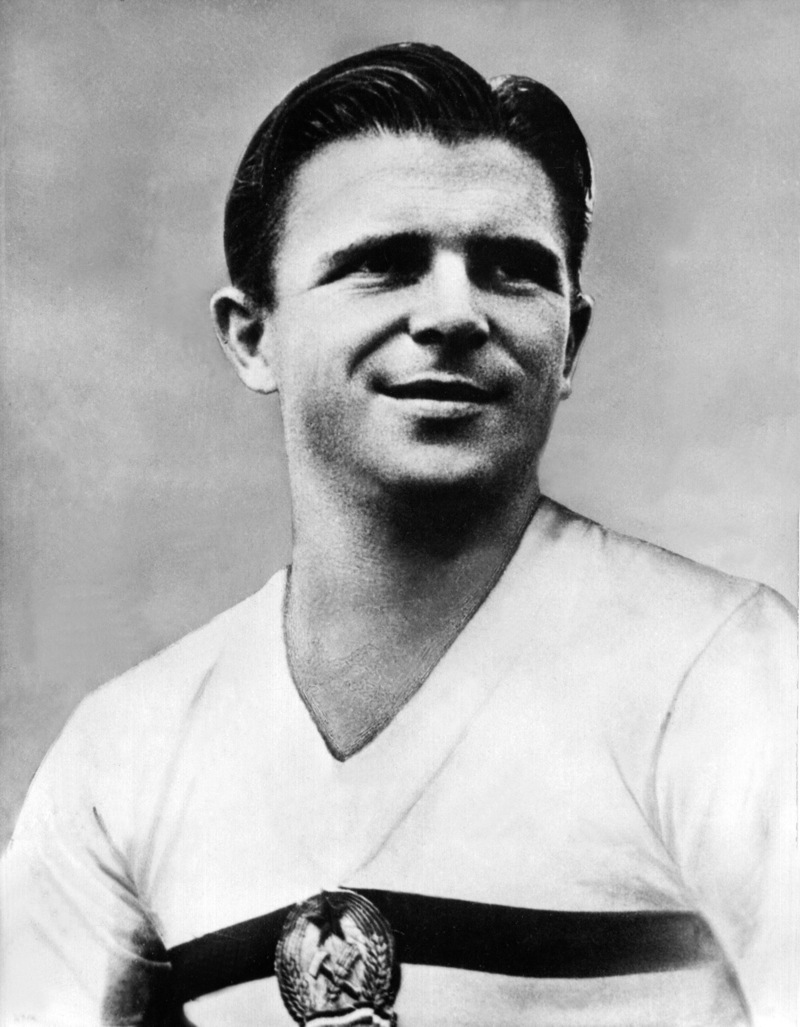
Ferenc Puskás is regarded as the greatest Hungarian footballer of all time and was part of the legendary international team known as the Mighty Magyars and the equally legendary Real Madrid team of the late 1950s and early 1960s, which included Alfredo Di Stefano.
Puskás was a prolific left footed striker, or inside forward, and scored 514 goals in 529 league games, and 84 goals in 85 internationals for Hungary. He also made four international appearances for Spain, without scoring. Nicknamed the Galloping Major, Puskás wasn't built like a footballer. Short, stocky, barrel chested and overweight, he was extremely one footed and couldn't head the ball!

The Galloping Major

Born in 1927, Puskás joined Kispest AC as a junior. He played under the assumed identity, Miklos Kovacs, until he was 12, and officially old enough to join, and made his first senior appearance for Kispest in November 1943, against Nagyvarad. In 1949, the club was taken over by the Hungarian Ministry of Defence, becoming the Hungarian Army team, and renamed Honved.
With Honved, Puskás won five Hungarian championships and finished as the league's top scorer four times. In the years in which he finished top scorer, he scored 50 (1947-48 season), 31 (1949-50), 25 (1950) and 27 (1953) goals. He was the top scorer in Europe in 1948. By the time he left in 1956, Puskás had scored a phenomenal 358 goals in 349 games

Mighty Magyars

Puskás made his debut for the Hungarian national team in 1945, at the age of 18, scoring in a 5-2 win over Austria. He formed an integral part of the team that went unbeaten for a world record 32 consecutive games, during which they became Olympic Champions in 1952, beating Yugoslavia 2-0 in the final in Helsinki. He played alongside other greats such as Zoltán Czibor, Sándor Kocsis, József Bozsik and Nándor Hidegkuti.
Puskás was part of the Mighty Magyars team that, in 1953, became the first non-UK team to beat England at Wembley, scoring two of Hungary's goals as they won 6-3. They also defeated England 7-1 in Budapest a year later.
In the 1954 World Cup, Hungary entered as hot favourites, and Puskás scored three goals in the two first round matches, but then suffered an ankle injury which ruled him out until the final. In the final, despite still showing the effects of his injury, he scored an early goal, and Hungary doubled their advantage to lead 2-0, but opponents West Germany clawed it back and took the lead with six minutes left 3-2. Puskás had a goal controversially disallowed for being offside, ending Hungary's record four year unbeaten run.

Stranded in Europe

When Honved entered the European Cup in 1956, little did they know they were to see the end of the team as they knew it. After losing 3-2 in the away leg at Atletico Bilbao, the players were left stranded in Europe due to the outbreak of the Hungarian Revolution in Budapest. The return leg, therefore, was arranged to be played at Heysel Stadium in Brussels and the game ended in a 3-3 draw, meaning Honved went out on aggregate 6-5. So, stuck on the continent, the team broke up and many players found clubs in Western Europe, including Puskás, who after a trial with Espanyol, eventually signed for Real Madrid.
Before arriving in Madrid in 1958, Puskás spent a year in Austria, but failed to get a playing permit. He wanted to play in Italy, and Juventus and AC Milan were interested before UEFA placed a two year ban on his shoulders. He piled on the pounds and being the wrong side of 30, clubs were unwilling to take a chance on him. Fortunately, his old Honved manager, Emil Oestreicher, rescued him from the wilderness and took him to the Bernabeu.

Real Madrid

Puskás spent eight seasons at Real Madrid, scoring 156 goals in 180 league games and was the league's top scorer four times. He helped Real win La Liga five times in a row between 1961 and 1965 and the Copa del Generalisimo in 1962, and formed a deadly partnership with the legendary Alfredo Di Stefano.
He played a further 39 games in the European Cup, scoring 35 goals. He helped Real reach the Final of the 1959 European Cup, but missed out through injury. He was back with a bang a year later though, scoring four times in a 7-3 triumph over German side Eintracht Frankfurt.
Two years later in the 1962 final, Puskás scored another hat trick, but Real were defeated 5-3 by Benfica. His third and last European Cup success came in 1966, with a 2-1 win over Partizan Belgrade. In all competitions, he scored 236 goals in 261 games for Madrid.
In 1962, Puskás took Spanish nationality and played four times for Spain at the 1962 World Cup. However, he failed to score as Spain crashed out at the first hurdle, winning just one of their qualifying matches, and finishing bottom of their group.

Coaching Career

After retiring as a player, Puskás went on to coach several teams across the world. His finest moment as a coach came in 1971, when he guided Panathinaikos to the European Cup Final, which remains the only time a Greek club has reached a European final. The side lost 2-0 to Ajax at Wembley. He also led the Greek side to two league championships, in 1971 and 1972. His only other success as a manager came with South Melbourne Hellas, whom he led to a National Soccer League title in 1991.
In 1993, he took charge of the Hungarian national team for four matches, having been forgiven for defecting to Spain to avoid the Soviet uprising in his homeland. In all, he coached teams in Spain, USA, Canada, Greece, Paraguay, Chile, Saudi Arabia and Egypt, including Deportivo Alaves, Vancouver Royals, Colo-Colo and AEK Athens.
Puskás was diagnosed with Alzheimer's disease in 2000 and died of pneumonia on November 17 2006 aged 79. The Nepstadion in Budapest was renamed the Stadion Puskás Ferenc in his honour in 2002.

Individual Honours

  • European Cup Top Scorer: 1964, 1960
  • Pichichi Trophy: 1964, 1963, 1961, 1960
  • Silver Ball European Footballer of the Year: 1960
  • Hungarian Top Goalscorer: 1953, 1950, 1948
  • World Player of the Year: 1953, 1952
  • Named in FIFA 100
  • European Player of the Century XX
  • Hungarian Player of the Century XX
  • Hungarian Top Goalscorer of the Century XX

Player Statistics

Senior Club and National Team Statistics
Period Team Appearances (Goals)
1943-1949 Kispest A.C.
177 (187)
1949-1955 Honvéd 164 (165)
1957 Espanyol (guest) n/a (n/a)
1958-1966 Real Madrid
182 (157)
1945-1956 Hungary 85 (84)
1961-1962 Spain 4 (0)

Tuesday, June 7, 2011

Denis Law

Full name: Denis Law
Date of birth: 24/02/1940

Introduction

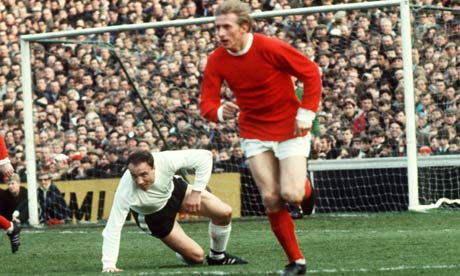
Denis Law was born on February 24th 1940 in Aberdeen, Scotland, to parents Robina and George. He was the son of a fisherman and youngest of seven brothers. The family was so poor that all his shoes had been handed down and his first pair of boots were a second-hand gift from a neighbour. From a young age he was obsessed with football, spending all his money on watching Aberdeen or smaller local teams play. He disappointed his parents when he turned down a place at a grammar school, as they would have had him playing rugby rather than his beloved sport. He played for his school and showed excellent promise from a young age, soon being picked up by the Scottish Schoolboy's team. He moved on to play for Huddersfield Town relatively soon after and went on to play for a string of internationally recognised clubs. His achievements and following were such, that the parents of Dutch star, Dennis Bergkamp, named their child after Law. He eventually retired after a glorious career when a recurring knee injury hindered his play to the extent that no club were prepared to take him on for the price tag requested by his final team, Manchester United. He is now recognised as one of the greatest Scottish players in the history of football.

Career Overview

Law was signed to Huddersfield Town in 1955 after a rather uninspiring trial where he was mocked for his small build and poor eyesight that forced him to squint. He underwent correctional surgery that allowed him to play with both eyes open and this not only improved his skills on the ball but also gave him the self-confidence to shine as one of the team's most inventive young players. He was the youngest player to be signed for the team at fifteen. The team were relegated to the second division and he made his début aged sixteen on Christmas Eve 1956, in a 2-0 win against Notts County. Various offers were made for him during his early years and when his manager left to go to Liverpool, the team could not afford his rising transfer fee. In 1958 he made his international début, scoring against Wales and was signed to Manchester City for a record breaking £55,000 in 1960. Law played an important part in City retaining their place in the First Division, and many thought that he had perhaps made the wrong decision in moving to Manchester City. His performance in international fixtures was slightly less inspiring, and Scotland suffered some massive defeats in the early 60s.
Disappointed by the way his career in England was progressing, he transferred to the Italian team Torino, in the hope of earning more. He struggled to adapt to the style of play on the Continent and as pay was adjusted according to how many goals were scored, he did not reap financial rewards he had hoped for either. After suffering minor injuries in a car accident with fellow footballer Joe Baker, who came off far worse, Law returned to Manchester. He was signed for another record sum, this time a staggering £115,000 on 18th August 1962.

It was with Manchester United that his career really picked up and he began to achieve what he had always hoped for. He created and scored countless goals, his speed and agility and strength in the air soon making him a keen favourite of the fans. He scored in the FA Cup Final in 1963 against Leicester City. The following season Law scored 28 goals for Manchester United, making him the top scorer in the league. His career was dotted with pay disputes with managers, but these were mostly dealt with amicably, in order to maintain club stability and appease the press. His international career never reached the same heights as his achievements at Manchester United, but he scored several important goals against Scotland's closest rival, England.

Law played his final league games with Manchester City, and famously scored his final goal for them which relegated Manchester United, his previous club. He played one match for Scotland after this in the 1974 World Cup, but his career was essentially finished by this point and he made little impact.


Achievements


Personal

  • European Footballer of the Year 1964
  • Inaugural Inductee of the English Football Hall of Fame 2002
  • Scotland's Golden Player by the Scottish Football Association (most outstanding Scottish player of the last 50 years) 2003
  • 37 goals in 67 appearances for Manchester City
  • 236 goals in 393 appearances for Manchester City
  • 30 goals and 55 appearances for Scotland
  • Total of 587 league goals in 300 games

Team Titles

  • 1963 FA Cup with Manchester United
  • English First Division Title 1965 and 1967 with Manchester United

Playing Style

Law is regarded as one of the most lethal strikers of his generation, scoring countless goals with his agile techniques and superb aerial plays. His small frame made him particularly nimble, and led to his trademark habit of gripping his long sleeves in his fists when he jumped for the ball. He had extremely sharp reflexes, and this, coupled with his superb awareness of his surroundings and his anticipation, made him one of the most intelligent players ever seen. His passing skills showed amazing foresight and he created countless goals from the midfield where he would regularly be seen supporting his team mates. He was also particularly useful further back on the pitch, because of his sharp tackling skills. His ability to predict his opponent's movements made him an even more challenging midfield player. His overall style has been described as arrogant and forceful, something which his fans grew to love and led to them nicknaming him “The King”.

Personal Life

Law was married in December 1962 to Diana with whom he still resides in Manchester. They went on to have five children, some of whom have chosen to work with Manchester United in capacities off the pitch. Law also contributes to the club still, and to local media by acting as sports presenter. He remains close friends with his fellow Manchester United team mates.

Player Statistics

Senior Club and National Team Statistics
Period Team Appearances (Goals)
1956-1960 Huddersfield Town 81 (16)
1960-1961 Manchester City 44 (21)
1961-1962 Torino 27 (10)
1962-1973 Manchester United 309 (171)
1973-1974 Manchester City 24 (9)
1958-1974 Scotland 55 (30)

Saturday, June 4, 2011

Roy Keane

Full name: Roy Maurice Keane
Date of birth: 10/08/1971

Introduction

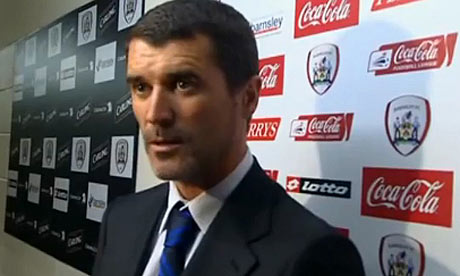
Surely one of the most controversial footballers ever to play in the English game, Roy Keane has had a distinguished career, littered with trophies and accolades. Keane had a long and highly successful career at the world famous Manchester United, holding the captain’s armband for nearly ten years, before a brief stint at Glasgow’s Celtic. He recently entered the world of football management, and has had a so-far successful term at Sunderland since 2006.

Early Life

Roy Maurice Keane was born in Cork, Ireland, in 1971. His first sport was boxing, and he excelled in the fights he took part in, perhaps no surprise to those who’ve seen his dominant and aggressive nature when playing football. Keane played for local side Rockmount AFC at the time, and his promise as a footballer was highlighted when he turned out for trials with the Irish schoolboy squad. However, Keane was turned down for being too small. He took jobs involving manual labour in an attempt to build himself up. His efforts paid off and in 1989 he was signed to semi-professional side Cobh Ramblers. After impressing both players and fans, Keane was picked up by a Nottingham Forest scout, and taken to the club by the legendary Brian Clough. Keane quickly became a regular starter in the team, and was involved in two consecutive cup finals: the FA cup in 1991, and the league cup in 1992. Unfortunately, Forest lost both.

Club Career

United He Stood
In July 1993, Manchester United manager Alex Ferguson swooped, hijacking Keane’s proposed move to Blackburn Rovers at the last minute. Ferguson phoned the Irishman and persuaded him to be a part of a team that had just won the Premiership in style. Keane agreed, and United paid a new English transfer record of £3.75 million for the promising young midfielder. The season that followed couldn’t have gone any better for ‘Keano’, as he was nicknamed by United fans. After a blistering Premiership campaign, during which Keane helped himself to three goals, United won the title in 1994. Two weeks later the club won the FA Cup final, beating Chelsea 4-0 to secure a first ever double for the team.
The next season was less successful, and early evidence of Keane’s aggressive streak was seen against Crystal Palace, when he stamped on Gareth Southgate and received the first of his eventual 11 red cards accumulated whilst at United.
Captain Keano
In 1996, Keane again helped Manchester United to another double, and at the end of the next season, in which United successfully defended their Premiership title, he took over as the favoured team captain when the much loved Eric Cantona left the club. Keane spent most of his first season as captain in the stands after tearing the cruciate ligament in his knee. However, he worked hard to regain fitness for the 1998-1999 season, and led United throughout their most successful season ever. Keane propelled the team to a Premiership, FA Cup and UEFA Champions League treble, the first club in English football history to accomplish such a feat. However, in a cruel blow, Keane was forced to watch the incredibly tense European Cup final from the stands, after picking up a yellow card in the semi-final.
Keane was the inspiration and the driving force behind United’s success, and captained the club to four Premiership titles in five years, from 1999 through to 2001 and again in 2003. In 2000 Roy was named PFA Players’ Player of the Year. His tenacity and hard work meant he was arguably the most respected player in the Premiership.
The Infamous Prawn Sandwiches
In December 2000, Keane went on his most famous rant, criticising fans and team-mates for lacking a winning desire. After a Champions League win at Dynamo Kiev, Keane moaned about a lack of support from the crown.
“Away from home our fans are fantastic, I'd call them the hardcore fans. But at home they have a few drinks and probably the prawn sandwiches, and they don't realise what's going on out on the pitch.”
To this day corporate spectators at football matches are often labelled the ‘Prawn Sandwich Brigade’, a term coined by the media in reference to Keane’s comments. It describes those who get corporate tickets and, in his opinion, show little interest in the match itself.
‘Psycho’ Roy
The next few years brought success for Keane and United, but not without problems. Keane was often critical of team mates, accusing them of losing the motivational attitude that had won them the Champions League in 1999. In August 2003 he was at the centre of a media frenzy, after claiming in his autobiography that he deliberately injured Alf-Inge Haaland, a Manchester City player with whom Keane had a long running feud dating back to 1997. It was during the media storm that Keane elbowed Sunderland player Jason McAteer, prompting the media to brand him a ‘psycho’, not for the first time in his career. He was red-carded and suspended for eight matches in total.
Keane returned from suspension with a rejuvenated hip, the result of an operation on a long term injury which at first looked career-ending. Despite fears he wouldn’t have the same mobility and ferocity after the surgery, Keane was soon back to his best and led the squad to an eighth Premiership title the same season.
Keane To Move On
On 18 November 2005, Manchester United announced Keane’s unexpected departure. The move came after months of increasing tension between Keane and the United management and playing staff, after he had numerous arguments with Alex Ferguson and criticised other players' performances. Keane and United parted ways after 12 years of success, leaving fans with fond memories of a club legend who never stopped fighting to take United to the top again and again.
Nearly a month later, Keane signed for Celtic, a club he had longed to play at for most of his career. He proved he was still a force to be reckoned with, and put in several match winning performances for the team. However, he was still having huge problems with injury, and just six months later was forced to retire from professional football for medical reasons.
Playing Feuds
Keane vs Vieira
Roy had a long running feud with his midfield rival at Arsenal, Patrick Vieira. The two were famous for launching heated verbal attacks in games between United and Arsenal, and in one famous tunnel argument, Keane swore at Vieira live on television. The two had a competitive relationship and had a healthy but tumultuous rivalry.
Keane vs Inge Haaland
Perhaps the most bitter of Keane’s words were reserved for Alf Inge Haaland, a Manchester City player. The feud stretched back to 1997, when Keane tore his knee ligament whilst attempting to tackle the player. Haaland stood over Keane and accused him of faking injury to get away with the foul he’d tried to commit. Keane was livid, and four years later was sent off for a brutal tackle on Haaland which he has since admitted was intended to hurt the player. He was fined more than £150,000 and banned for eight matches overall.

International Career

Roy Keane had a dislike of the Irish national team’s organisation and set-up throughout his career, which led to numerous disagreements with various managers. His first row was with manager Jack Charlton during a tournament in the US, when they disagreed on playing style. However, Keane played every game in the USA World Cup of 1994, despite disagreements with Charlton.
Keane’s biggest bust-up was with the then Irish manager Mick McCarthy, during the 2002 World Cup in South Korea and Japan. The Irish team was based on the small Pacific island of Saipan for the duration of their campaign, much to the annoyance of Roy. He wasn’t happy with the location, and criticised its inadequate training facilities. Tempers rose, and things came to a head after Keane gave a newspaper interview in which he severely insulted and berated McCarthy. The Irish manager dismissed him from the squad and sent him home, and the incident caused massive controversy in both Ireland and the UK.
Keane was recalled when McCarthy resigned, but failure to qualify for the 2006 World Cup was enough for the player, and he retired from international football soon after.

Managerial Career

Roy Keane went into management the season after his retirement from football. He linked up with former Republic of Ireland teammate Niall Quinn, chairman of Championship outfit Sunderland. Keane made some stellar signings, bringing, among others, former Celtic team-mates Ross Wallace and Stanislav Varga, as well as former Manchester United teammate Dwight Yorke, to the north-east club. His no-nonsense playing style seemed to apply to management as well, and when three players were late for the team coach to an away match, he left them behind. A dream season saw Keane take the Mackems to the top of the table and secure Premiership promotion. Keane continues to manage Sunderland in the Premiership.

Personal Life

Keane is married to Theresa Doyle, whom he met whilst playing at Nottingham Forest. They married in 1997 and have five children together. They live in Durham in the north-east of England.

Individual Honours

  • FWA Footballer of the Year: 2000
  • PFA Players’ Player of the Year: 2000

Player Statistics

Senior Club and National Team Statistics
Period Team Appearances (Goals)
1989-1990 Cobh Ramblers 12 (1)
1990-1993 Nottingham Forest 114 (22)
1993-2005 Manchester United 323 (33)
2005-2006 Celtic 10 (1)
1991-2005 Republic of Ireland 66 (9)

Kaká

Full name: Ricardo Izecson dos Santos Leite
Date of birth: 22/04/1982

Introduction

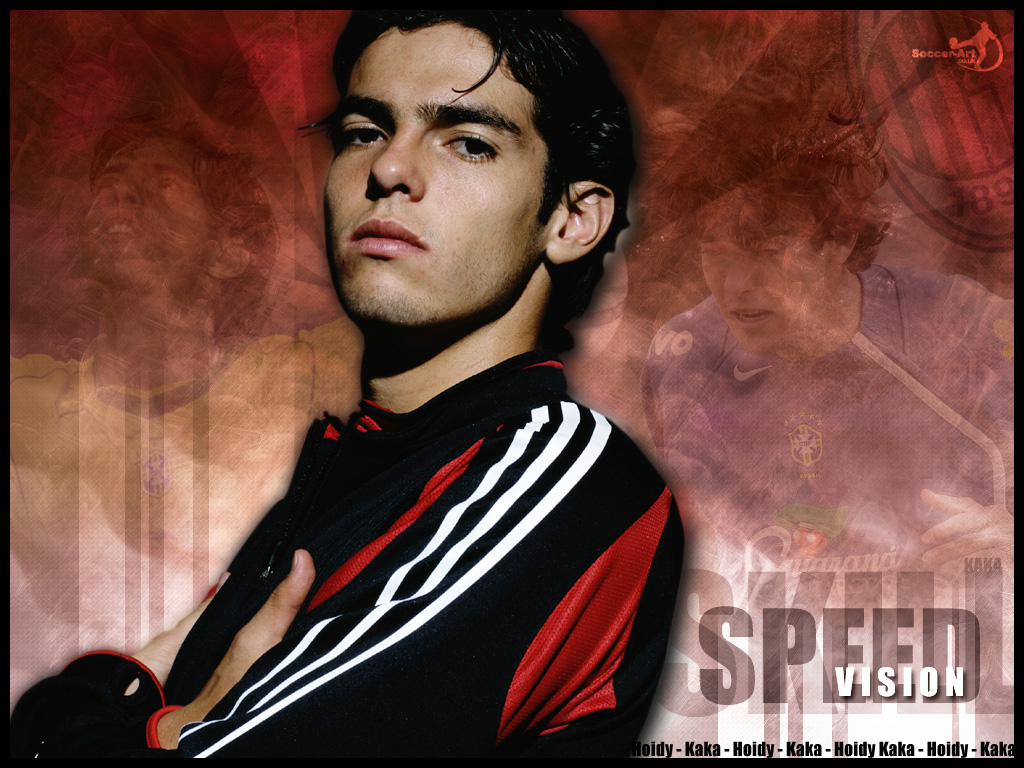
Brazil’s latest contribution to the pantheon of footballing greats, Kaká has arguably eclipsed his compatriot Ronaldinho as the greatest export in recent years. Both for AC Milan and the Seleção, his reputation has grown and grown, culminating in his eventual decisive contribution to the Italian side’s Champions League victory in 2007. While this may have proved his apex thus far, his general all-round play and remarkable goal-scoring record from deep, coupled with his relative youth, make him one of the best practitioners of the sport in the 21st century.

Career Overview


Early Career In Brazil

Born in the national capital of Brasilia, Ricardo Izecson dos Santos Leite was always a tremendous prospect. Developing his skills in the traditional Brazilian fashion on the streets, it wasn’t long before he made waves in the sport itself, signing a contract with São Paulo at just 15 years old (having been affiliated with the legendary side since the age of 8).
Starting out with the youth side, his impact was immediate as they picked up the Copa de Juvenil and a senior position beckoned. This duly arrived in 2001 and the young Kaká did not need a second chance, scoring consistently throughout his two seasons and even helping the club to the (now seemingly defunct) Torneio Rio-São Paulo championship in 2001.
His development physically and technically in such a short period made him a shoe-in for the national side and Kaká was duly called up for the Brazil side in 2002 against Bolivia. He also made his World Cup debut the same year, joining up with the squad and taking to the field in the tournament, although only for a cumulative 19 minutes. By 2003 though, he was getting greater recognition, reflected in his role as captain for Brazil’s Gold Cup campaign, which ended with defeat in the final and a tournament haul of three goals for Kaká personally.
As is the way, Europe’s finest clubs were put on alert by the young forward’s abilities. This makes it even more remarkable that AC Milan needed to stump up just $8.5 million for his signature in 2003, in contrast to the $40.5 million paid by Real Betis for Denilson in 1998.

The Milanese Phenomenon

Although AC Milan were the-then Champions League holders, Kaká was seemingly undaunted by the prospect of competing with the squad’s many stars. Within a month, he was entered into the first-team against Ancona and immediately impressed in their 2-0 victory. This trend continued throughout his debut season, as the golden boy notched up 10 goals and proved decisive in Milan picking up the Scudetto.
Established in the side as the withdrawn striker, the Brazilian’s form was carried through to the 2004/2005 campaign, although without the same success for the club itself. While Kaká was picking up headlines for his contribution throughout the tournament, AC Milan lost the Champions League final that season in Istanbul in exceptional circumstances to Liverpool on penalties, arguably beating themselves in an insane turnaround.
The disappointment of that defeat carried through the following season, although Kaká himself seemed to use it as incentive to double his efforts and impact. Established in the Brazilian side as a regular by now, his goal tally doubled in 2005/2006, finishing with 14 goals from his withdrawn position.
Coming off the back of such a great season, Kaká was seen as one of the main men to watch in the 2005 World Cup. However, with the entire Brazilian squad painfully off-form and in need of revitalisation, Kaká struggled to make an impact, as the side went out to France in the quarter-finals.
The disappointments seemed to come thick and fast, as club legend Andriy Shevchenko then departed that summer. Testifying to the Brazilian’s spirit though, this apparently only helped Kaká, as the side organically developed with him at its heart. Despite the club’s calamitous league campaign, destroyed by the blow of losing Shevchenko, their modern love affair with the Champions League continued that season, largely courtesy of Kaká. His deciding goal in the knock-out stages against Celtic and overall genius against Manchester United in the semi-final, not to mention his assist in the final, alerted the world to his incredible talents.
After AC Milan took revenge on Liverpool in the final 2-0, Kaká was flooded with plaudits. The Times named him the Best Player in the World, concurring with UEFA’s later assessment, declaring him the Club Footballer of the Year. The big accolades then followed, as Kaká first won the prestigious Ballon d’Or for 2007 and completed the double with the FIFA World Player of the Year, replacing Italy’s Fabio Cannavaro both times.
Now into his fifth season with the Milanese club, Kaká has remained focused and keeps banging in the goals. Whether he will remain in Italy is another matter though and, with Real Madrid having made very public announcements of their desire to sign the Brazilian, you can be certain that Kaká will be in the headlines plenty in the future.

Personal Life

The nickname Kaká refers to the phonology of his first name (Ricardo) but, more specifically, his little brother’s inability to pronounce Ricardo (opting instead for Caca, which soon became Kaká). His upbringing and religion remains a huge influence and it was little surprise that he began to pray after the final whistle in the 2006/2007 Champions League final. He is also a member of Atletas de Criso (Athletes of Christ) and serves as an Ambassador Against Hunger for the UN’s World Food Programme.
In stark contrast to playboy footballers, Kaká married his childhood sweetheart, Caroline Celico, on 23rd September 2005. The two are expecting their first child presently.

Honours And Accolades


Individual Honours

  • IFFHS World’s Best Playmaker: 2007
  • IAAF Latin Sportsman of the Year: 2007
  • Onze d’Or: 2007
  • Toyota Award: 2007
  • FIFA Club World Cup Golden Ball: 2007
  • Ballon d’Or: 2007
  • FIFPro World Player of the Year: 2007
  • UEFA Vodafone Fans’ Player of the Season: 2007
  • UEFA Club Footballer of the Year: 2007
  • UEFA Club Forward of the Year: 2007
  • UEFA Champions League Top Scorer: 2007
  • FIFPro World XI: 2006, 2007
  • UEFA Team of the Year: 2006, 2007
  • UEFA Champions League Best Midfielder: 2005
  • Serie A Footballer of the Year: 2004, 2007
  • Serie A Foreign Footballer of the Year: 2004, 2006, 2007
  • Serie A Young Footballer of the Year: 2003
  • CONCACAF Gold Cup Best XI: 2003
  • Campeonato Brasileiro Bola de prate (best player by position): 2002
  • Revista Placar Bola de Ouro: 2002

Player Statistics

Senior Club and National Team Statistics
Period Team Appearances (Goals)
2001-2003 São Paulo 59 (23)
2003-present A.C. Milan 162 (54)
2002-present Brazil 59 (22)

Friday, June 3, 2011

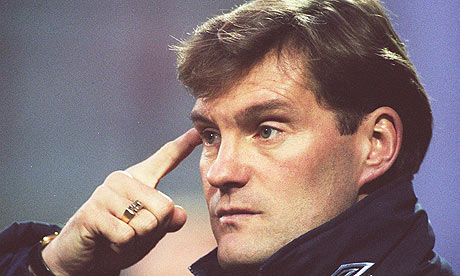
Glenn Hoddle

Full name: Glenn Hoddle
Date of birth: 27/10/1957
Arguably one of the greatest British players to have ever graced the hallowed turfs of the beautiful game, Hoddle was an attacking midfielder of the highest order, who had incredible vision to pass a ball and was gifted with the close ball control of a genius. Pivotal to the England squad for 9 years between 1979 - 1988, Hoddle then went on to manage the national team following retirement. His club career was also prolific. With Tottenham Hotspur he scored 110 goals in 499 appearances.

Career Highlights

Club Football
Glenn Hoddle began professional football with Tottenham Hotspur as a schoolboy apprentice in 1974, but it wasn't until August 1975 that he made his first team debut, as a substitute against Norwich in the cup. He made an explosive impact in his First Division game debut when he scored a spectacular strike, beating the England and Stoke City goalkeeper Peter Shilton.
The following season, Spurs were relegated to the Second Division for the first time in 27 years, but Hoddle proved an inspiration in guiding their immediate return to top flight football. By the 1979-80 campaign, Hoddle had burst onto the scene as one of the truly top class players around in British football. That season he was awarded PFA Young Player of the Year at the age of 22, having scored 19 times in 41 league appearances.
Hoddle hit the peak of his career the following year (1981) when he was fundamental to Spurs claiming the FA Cup. The following season, Hoddle assured their retention of the FA Cup, scoring in the final and also the replay. To top this off, Spurs also reached 4th place in the league the same season, attaining their best position since 1971. They also reached the semi-finals of the European Cup Winners Cup.
In 1984, Tottenham Hotspur triumphed by taking home the UEFA Cup and Hoddle was once again the cornerstone of this success. In a particularly memorable second round match against Feyenoord Rotterdam, he produced a phenomenal performance, containing the Dutch genius Johan Cruyff and leading Spurs to a pounding 6-2 victory. Hoddle lasted three more seasons of relative success with Spurs before being signed by Arsene Wenger who managed AS Monaco at the time. By the end of his time at Spurs, Hoddle had scored 110 goals in 490 first team appearances in all competitions.
Wenger brought Hoddle into French football, reportedly being particularly taken by his genius on the ball and his European-style creativity. In fact, on his exit from Spurs, Hoddle himself made the statement that he was going overseas where his creative style of play would be more appreciated by fellow players and managers. Hoddle did indeed experience great success in French football, helping Monaco to the 1988 Ligue 1 Championship and then to the quarter final stage of the European Cup the following year. Were it not for the serious knee injury that he obtained in 1990, he would have perhaps stayed in France, but at the age of 33 he left Monaco by mutual consent.
Returning home, Hoddle spent a brief time in a non-contractual agreement with Chelsea. He didn't have time to make one senior appearance for Chelsea however, before moving into the managerial phase of his career with Swindon Town.
International Football
Many pundits will argue that Glenn Hoddle never really realised his full potential on the international football arena. He was a skilful and creative player and often did not fit in well with the game-plan of many of the England managers of this period, who favoured hard work and a more physical game.
Hoddle made his debut for England in an Under-21 fixture against Wales in December 1976. It was not until November 1979 that he made his first team debut against Bulgaria. In the 1982 World Cup, he made appearances against Kuwait and Czechoslovakia but played a more important role in 1986 when England got as far as the quarter finals before being eliminated by Argentina.

Managerial Career

Hoddle's managerial career began with Swindon Town, which in 1991, was in the midst of a financial scandal. "The Robins" had been stripped of their promotion honours, due to serious financial illegalities that had earned the club considerable bad press and was beginning to affect their league form. Things began very well for Hoddle as he managed to prevent The Robins from dropping further into the Third Division. The following season, things continued to improve, as Swindon finished in ninth place, narrowly missing out on a play-off place. In 1993 Swindon were riding on two seasons of success and reached the new Division One play-offs. In the final, against considerable odds, they beat Leicester City F.C. 4-3 at Wembley and were subsequently promoted to the Premier League. As a result of his turning around Swindon, Hoddle was in demand from several major clubs, one of which was Chelsea.
He joined Chelsea as player-manager in 1993 and made 36 appearances for the side, despite his ripe old age of 36. His successful streak seemingly continued: Chelsea reached the FA Cup final, but they were thrashed 4-0 by Manchester United. Chelsea, however, were admitted to the Cup Winners Cup by default as Manchester United won the double that year and under Hoddle, they reached the semifinals, before being eliminated by eventual winners Real Zaragoza. In the 1995/6 season, he guided them once again into touching distance of silver ware. This time they were knocked out in the semi-finals of the FA Cup.

In 1996 Hoddle took the England job. All began well, as he assured their qualification for the 1998 FIFA World Cup Finals, securing their place in a 0-0 draw with Italy in Rome. The squad he took to France caused controversy, famously omitting Paul Gascoigne in favour of faith healer Eileen Drury and earning the team the name of "The God Squad" in the press. England were knocked out in the second round by Argentina, a match which included the famous dismissal of David Beckham from the field.
In the most bizarre of circumstances, Hoddle was sacked from the position of England manager in 1999. He came under fire for comments made in an interview with The Times newspaper in which he blamed disability on bad karma from actions in the past life. The uproar that followed this incident was considerable, Hoddle coming under vehement criticism from Tony Blair in a TV interview, with Blair stating that his comments were "very wrong" and that it "would be very difficult for him (Hoddle) to stay".
Glenn Hoddle continued to manage clubs after this obvious low-point in his career. In 2000 he joined Southampton, replacing Dave Jones as manager. He saved the Saints from relegation that season, but left in 2001 to return to Tottenham Hotspur, as the man in charge. In his first season he guided Spurs to the league cup final, which they lost 2-1 to Blackburn Rovers. The following season started well, but with Spurs' form deteriorating across the season and finishing in a mediocre 10th place, Hoddle fell short of the expectations of board and manager. In September 2003 he was sacked from the club he had served as a player for so many years.
Ever resilient, Hoddle bounced back in 2004 for another dose of management, with first division club Wolverhampton Wanderers. He was then fundamental in steadying a dangerously rocky boat at Wolves in the latter part of the 2004-5 season. Wolves began the following season strongly and were firm favourites for promotion. Disappointingly, they missed out on a play-off place, that being the minimum expected of them that season. Despite continued backing from the board, Hoddle chose to resign in July 2006. Since then, he has been working for Sky Sports, analysing games as a pundit.
Despite his mixed success as a manager and varied treatment as an individual in the press, Glenn Hoddle was a great and prolific football player and here is some Youtube footage of him with Tottenham Hotspur and England to prove so.

Individual Honours

  • PFA Young Player of the Year: 1980

Player Statistics

Senior Club and National Team Statistics
Period Team Appearances (Goals)
1975-1987 Tottenham Hotspur 377 (88)
1987-1991 A.S. Monaco 69 (27)
1991-1993 Swindon Town 64 (1)
1993-1995 Chelsea 31 (1)

Tuesday, May 24, 2011

Thierry Henry

Full Name: Thierry Daniel Henry
Date of Birth: 17/08/1977

Introduction

Thierry Henry has been a French professional footballer since the age of 17 and is perhaps most famous for the eight years he spent with Arsenal until June 2007.
To date, Henry has made almost 100 appearances for France, scoring over 40 goals. In total he has played in over 500 club matches and scored more than 260 goals. In the course of his career with Arsenal, he made 369 appearances, scored 226 goals and served up 82 assists.

Early Life

Thierry Daniel Henry was born in Paris on 17th August, 1977. Although he grew up in a deprived area, facilities for football were good and he showed an early promise. Despite the fact that he had no special interest in football as a child, Henry played for a number of local teams in the Ulis commune where he lived, encouraged by his father.

Professional Career

In 1990, at the age of 13, a talent scout saw Henry score six goals in a 6-0 victory over another local team. He was immediately asked to join A.S. Monaco (without the formality of a trial), first completing a period at the Clairefontaine academy, France’s national football centre and one of the country's nine elite academies.
Henry played his first professional game in December 1994 against Nice, when he was 17. At this stage he played on the left wing; later, manager Arsene Wenger realised he would be more effective as a striker.
Henry’s impact on the team was instant and impressive, with fans predicting the advent of a new star. He duly received the French Young Footballer of the Year award in 1996. Aided by his skills, Monaco also won the Ligue 1 title, the top division of French football. In June of 1997, Henry’s talent was recognised with his début for the under-21 French national side. By the end of the year, he had advanced to the senior team. He played his first international match against South Africa on October 11, 1997, which resulted in a 2-1 win to France.
In the 1997-98 season, Henry played a large part in helping his club reach the UEFA Champions League semi-final, scoring seven goals in the course of the competition. But it was the 1998 World Cup which saw his breakout performance, aiding the French to victory with a total three goals. In recognition of his contribution he was given the Légion d’Honneur on Bastille Day, 1998.
Thanks to his World Cup tour-de-force, Henry moved to the Italian Juventus in January 1998 for around £10.5 million. It was to be a disappointing year for him. Again playing as a winger, he had trouble finding his stride and scored only three goals in the course of 16 games.
In August, Henry was reunited with his former manager, Arsene Wenger, after another £10.5 million transfer to Arsenal. Although the move also meant a change back to striker, it took him a while to adjust to playing in his new position. Fans raised doubts about the transfer fee after he failed to score in first eight games. However, having settled in, he silenced his critics by scoring a total of 26 goals over the course of the season. Since then, Henry has been Arsenal’s top scorer for nearly every season.
Euro 2000 saw Henry back in action as part of France’s championship squad. Once again, he scored three goals, including the equaliser against Portugal in the semi-finals, allowing Zidane to win with a converted penalty in extra time. In the final, France eventually triumphed over Italy in extra time, finishing 2-1 up. Sadly, this performance was not matched two years later. In the 2002 World Cup the French side was missing Zidane due to injuries. They lost their first group match 1-0 to Senagal. In the second, against Uruguay, Henry was sent off. The match ended in a 0-0 draw but, thanks to the red card, he was unable to play in the third match, which Denmark won 2-0. This proved to be little more than a blip in an otherwise charmed career. France won the 2003 Confederations Cup, largely due to Henry’s talent, as Zidane could still not play. France also reached the quarter-finals in Euro 2004.
Meanwhile, Henry’s efforts were turning around Arsenal’s fortunes. The 2001-02 season saw them take the league title and win 2-0 against Chelsea in the FA Cup Final. A second Cup Final victory followed the next year. 2003-04 was arguably more successful, as Arsenal completed the entire season without losing a single game, something that had not happened for over a century. The following year also saw an FA Cup win, but Chelsea picked up the Premiership.
2005-06 saw repeated rumours that Henry would be leaving Arsenal for either Barcelona or Real Madrid. He eventually signed a four-year contract to stay. The season also saw him become Arsenal’s top goal-scorer of all time.
However, Henry’s 2006-07 season was first interrupted and eventually largely missed altogether due to various injuries, something unusual for him. Despite declaring that he would “always be a Gunner”, he left Arsenal for Barcelona in June 2007 - something he claimed was partially due to Wenger’s own uncertain future there but may be more easily explained by the club’s relatively poor performance that year. Barcelona was rumoured to be paying £130,000 per week for the privilege, after enduring a trophy-less season of their own.
Henry scored his first goal for Barcelona against Olympique Lyonnais on 19 September, 2007, in a Champions League match which they won 3-0. Ten days later he scored his first hat-trick, against Levante.

Personal Life

Henry has one child with English model Nicole Merry, whom he met whilst filming an advert for the Renault Clio. They were married in 2003 and daughter Tea Henry was born on May 27, 2005.
In June 2007 Henry and his wife separated, shortly before his transfer to Barcelona. Indeed, dissatisfaction with the move away from England is said to have contributed to the breakdown in their relationship. The divorce was finalised in the autumn, with speculation that Merry was asking for an eight-figure sum from Henry’s estimated £25 million fortune.
Henry is the founder of Stand Up Speak Up, a programme to address racism in football.

Individual Honours

  • European Golden Boot: 2004, 2005
  • FA Premier League top scorer: 2001–02, 2003–04, 2004–05, 2005–06. Henry also accumulated the highest goal tally in all four leagues in 2004 and 2006
  • Confederations Cup top scorer: 2003
  • Confederations Cup Golden Ball: 2003
  • Onze d'Or: 2003, 2006
  • PFA Players' Player of the Year: 2002–03, 2003–04
  • PFA Team of the Year: 2001, 2002, 2003, 2004, 2005, 2006
  • FWA Footballer Of The Year: 2002–03, 2003–04, 2005–06
  • FIFA World Player of the Year Runner-up: 2003, 2004
  • UEFA Team of the Year: 2001, 2002, 2003, 2004, 2006
  • European Footballer of the Year: 2nd place, 2003; 3rd place, 2006
  • French Player of the Year: 2000, 2003, 2004, 2005, 2006
  • In March 2004 the Argentinean football legend, Pelé, named Henry in his list of the best 125 living footballers.

Player Statistics

Senior Club and National Team Statistics
Period Team Appearances (Goals)
1994–1998 AS Monaco 105 (20)
1999 Juventus 16 (3)
1999–2007 Arsenal 254 (174)
2007– Barcelona 32 (12)
1997– France 105 (46)

Alan Hansen

Full name: Alan David Hansen
Date of birth: 13/06/1955
Alan Hansen is a Scottish former football player and BBC television football commentator. He is credited as being one of the most successful British footballers ever known and perhaps the greatest ever centre-half in the history of the game.
During a career spanning 14 years Alan Hansen collected over 17 football honours including seven Championships, two FA Cups, four League Cups, one Scottish First Division Cup and three European Cups. He is a member of the English Football Hall of Fame and was voted number 12 in the all time most favourite Liverpool players.

Early Life

Alan was born in Alloa, Clackmannanshire, Scotland on June the 13th 1955. He was raised in a sporting family and under the guidance of his Danish father he played a number of competitive team sports including football and volleyball. As a young man Alan decided against attending Aberdeen University, instead opting to follow his brother John into professional football.
John Hansen played for Scottish First Division team Partick Thistle. In 1973 little brother Alan was admitted into the first team where he immediately began to make an impression. Hansen made a name for himself as a dependable defender, meanwhile his every move was being watched by bigger name football entities for a possible transfer.
In the 1975/76 season Hansen's solid defending and accurate passing helped Partick Thistle win the Scottish First Division League Championship. This gave them admission to the Scottish premier League. During that season Alan wove his magic on the football field on some 35 occasions and his performance was duly noted.

Alan Hansen at Liverpool FC

Establishing a Reputation

The following year in 1977 Alan Hansen was transferred to Liverpool FC who met the bargain asking price of £110,000. His first game was against Derby County on the 24th September 1977 which Liverpool won 1-0.
Hansen scored his first goal for Liverpool almost a month later on the 19th October. It was a glorious day for Liverpool as they battered Germany's Dynamo Dresden in a 5-1 win with Hansen scoring the first goal of the match. During that first season with Liverpool FC Hansen spent much of his time on the sidelines but managed to be on the field for the 1-0 European Cup win over Bruges FC played at Wembley.
As he established his reputation at Liverpool, Hansen was seen on the field more and more often for major games. Finally in 1978 he formed part of the award winning defence that conceded a mere 16 goals in 42 League games, a new record.

Club Success, International Woes

Hansen carved out his niche at Liverpool as a hard-nosed yet fluid football player who could be depended on to win the ball back from attackers and pass it on accurately. He had fantastic awareness of positioning and was a frequent play maker, especially form the back.
With characteristic speed and agility Hansen was even known to break ranks and join the forwards up-field should the chance become available. With Hansen playing regularly, Liverpool continued to dominate the English Premier League during the early 80s.
Hansen was out of action for the first part of the 1979/80 football season due to injury. When he returned he was on stunning form, scoring four goals in total including the only point against Brighton and Hove Albion during March.
Once more he was instrumental in maintaining Liverpool's record breaking defensive posture, conceding only 30 goals and going on to win the League a record 12th time. Alan Hansen and Phil Thompson made a near unbeatable duo in central defence. It was due to their partnership, just beginning at this point, that Liverpool FC owed much of its defensive glory. 1979 was good year for Alan Hansen.
He earned his first two caps playing international football for Scotland against Wales in May and Argentina in June. It was not such a good year for Scotland however as they lost both games.
In 1981 Hansen was instrumental in winning Liverpool's first League Cup. He was the player who scored the winning goal against West Ham in a 2-1 win for Liverpool. Later that year Liverpool took home the European Cup after beating Real Madrid 1-0.
1982 proved a low point for Hansen as an embarrassing collision with team mate Willie Miller gave Ramoz Shengelia the opening he needed to fire home a game clinching goal for the USSR. This defeat effectively scuppered Scotland's chances at the World Cup in Spain that year as they didn't manage to proceed beyond the qualifiers.
Indeed, Alan Hansen's international performance is the single area of his footballing career where he failed to impress. This was partly due to bad luck and partly due to some controversial decisions to leave him out of the national squad.
A strong partnership between Willie Miller and Alex Dalgleish conspired to keep Hansen from being selected, as manager Alex Ferguson wanted to keep the pair together at international level. As a result Hansen was capped only 26 times, a number which by no means reflects his performance on the football field during an illustrious career.

The Tragedy at Hillsborough

In his autobiography, Alan Hansen: A Matter of Opinion, Alan alludes to 1989 as the most difficult time during his footballing career. On Saturday the 15th of April 1989 Hansen was back on the team following a nine month absence due to a knee injury.
Fears for his performance soon disappeared as Hansen blasted onto the field with three good passes in the early minutes of the game, including a play maker to Peter Beardsley who failed to capitalise, his shot on goal striking crossbar. Seconds later Hillsborough descended into a scene from hell as fans from the back of the stadium surged wildly forward crushing those in the front against the barriers.
A total of 95 people died that day and a 96th from his injuries a year later. Along with his team mates, Hansen was deeply affected by the disaster. To this day he continues to offer support to the families of victims through memorial services.

Retirement

The following season Hansen continued to be troubled by his knee injury but managed to captain Liverpool to yet another league title. This was to be Alan's eighth and final League title, which at the time was a record breaking figure. Alan continued to fight his injury but finally had to concede, retiring from a glorious career as Liverpool captain in 1991.

Hansen the Football Commentator

Soon after retirement from professional football, Hansen began commentating on the game for Sky Television. His witty commentary and incisive analysis, all delivered in a smooth central Scotland accent soon got him noticed by the BBC, who snapped him up for Radio 5 Live.
It wasn't long before he was a regular on BBC Television's live coverage of major matches. The indomitable Alan Hansen managed to carve out yet another niche as the de-facto commentator who was seldom wrong. He retains his unofficial title to this day.
Today Alan Hansen continues to commentate for BBC Sport. He lives with his wife Janet in Southport with whom he has two children, Lucy and Adam.

Player Statistics

Senior Club and National Team Statistics
Period Team Appearances (Goals)
1973-1977 Partick Thistle 86 (6)
1977-1991 Liverpool 620 (14)
1979-1987 Scotland 26 (0)
Related Posts Plugin for WordPress, Blogger...